
Sunway Pyramid · 2026
POKKA × Baito Group
Free your
Poka-Poka.
A Japanese journey through POKKA.
Concept, custom games and event delivery.
The project
How Baito brought POKKA’s brand to life at Sunway Pyramid
A train carriage in a shopping mall is a reason to stop. For POKKA, it became the start of a journey: step into a different mood, play with the brand, taste the drinks and leave with a memory of the day.
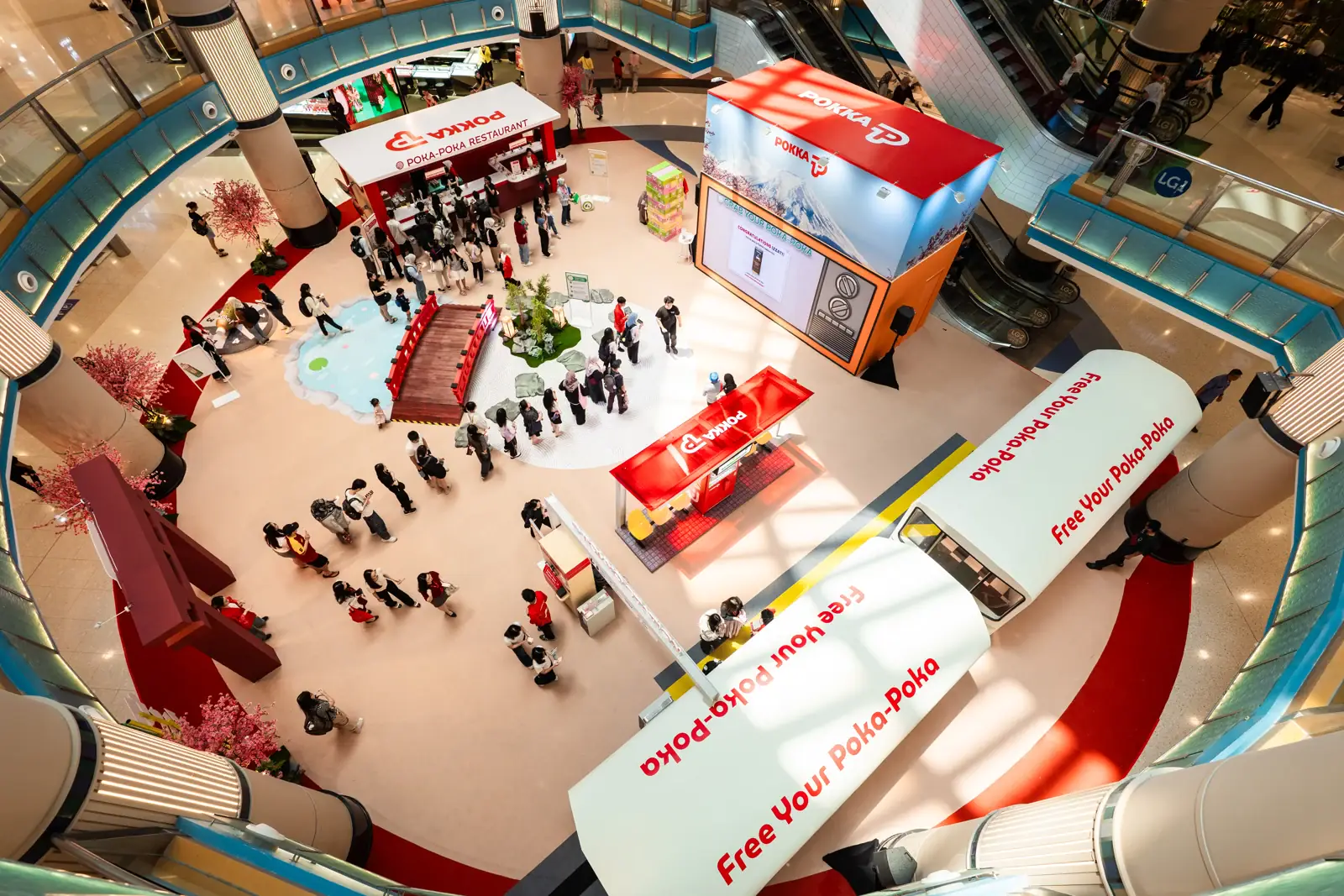
For Free Your Poka-Poka Concourse 2026, Baito translated the campaign into a Japanese-inspired destination at Sunway Pyramid. The train cabins, interactive games, restaurant and Express Prints booth each gave visitors a different way to experience the product range.
As POKKA’s appointed event management agency, we connected the creative development with planning, activity facilitation, manpower and redemption. The idea had to work as a place people wanted to explore and as an event the team could run, station by station.
Reported figures from Baito’s event report, 16–19 July 2026. Each measure records a different activity; the same guest may appear across activities.
01The concept
A journey through the moods of POKKA.
POKKA’s campaign connects Poka-Poka with warmth and playfulness. The creative response made that feeling physical: a Japanese train setting where the drinks became places to discover and activities to join.
The product range gave the world its different moods. Fruit tea inspired the strawberry-and-cloud cabin and its playful retro TV. Coffee became a café-style pause, with beans, brewing equipment and vinyl details. A moving sushi-style conveyor counter made tea tasting part of the Japanese setting. Tokyo Station connected these experiences through one recognisable visual language.
The Journey Card carried that concept into participation. Guests could collect activity stickers as they explored, then present a completed card for redemption. Station names, directional signs and promoter explanations were developed together so the creative idea also helped people understand what to do.
Express Prints completed the connection with a receipt-style photo keepsake beside the train. The result was a consistent journey across scenery, interaction, tasting and take-home memory.
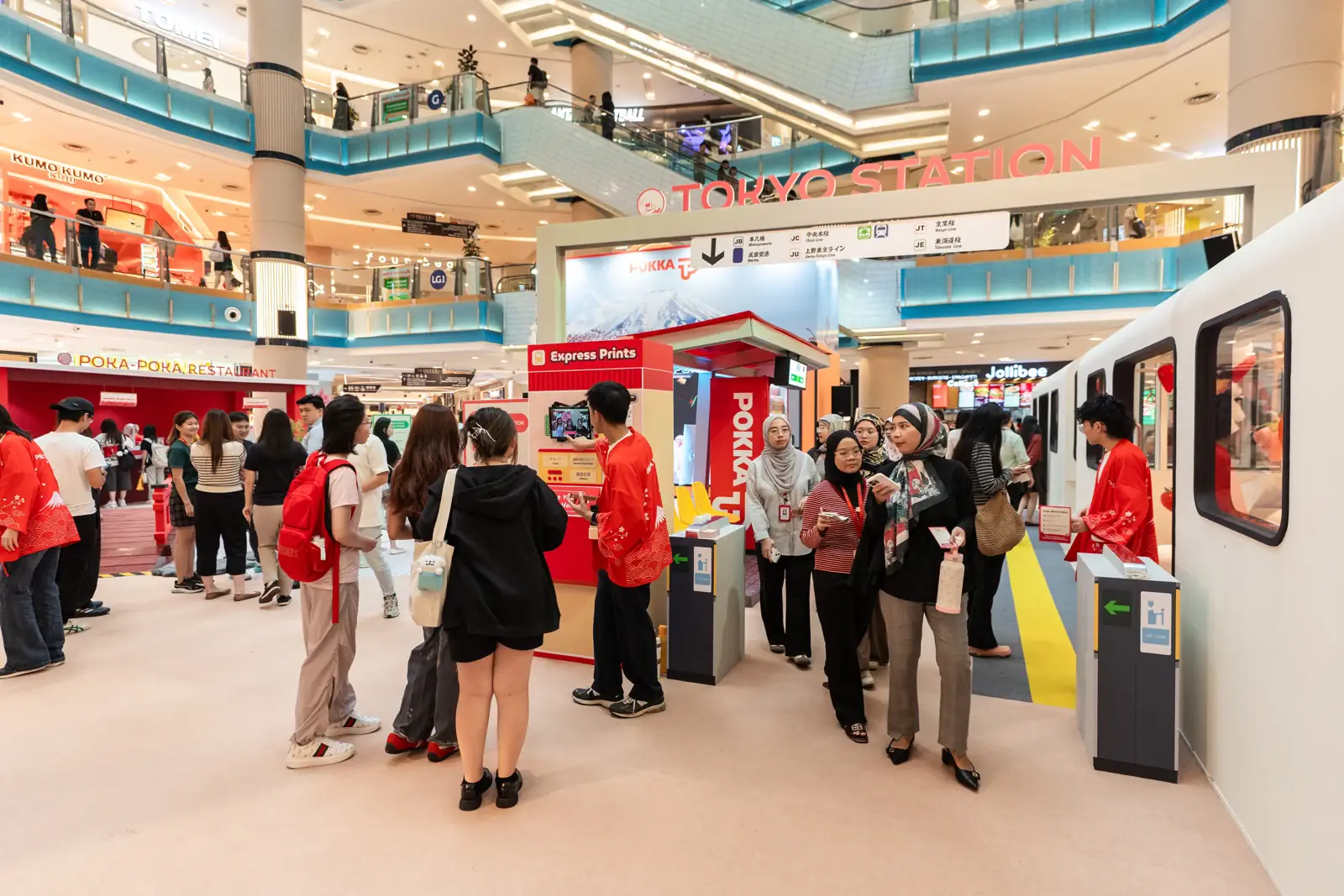
One world. Four ways into the brand.
Each part of the concept had a job to do.
02The setting
A setting to see, smell and play with.
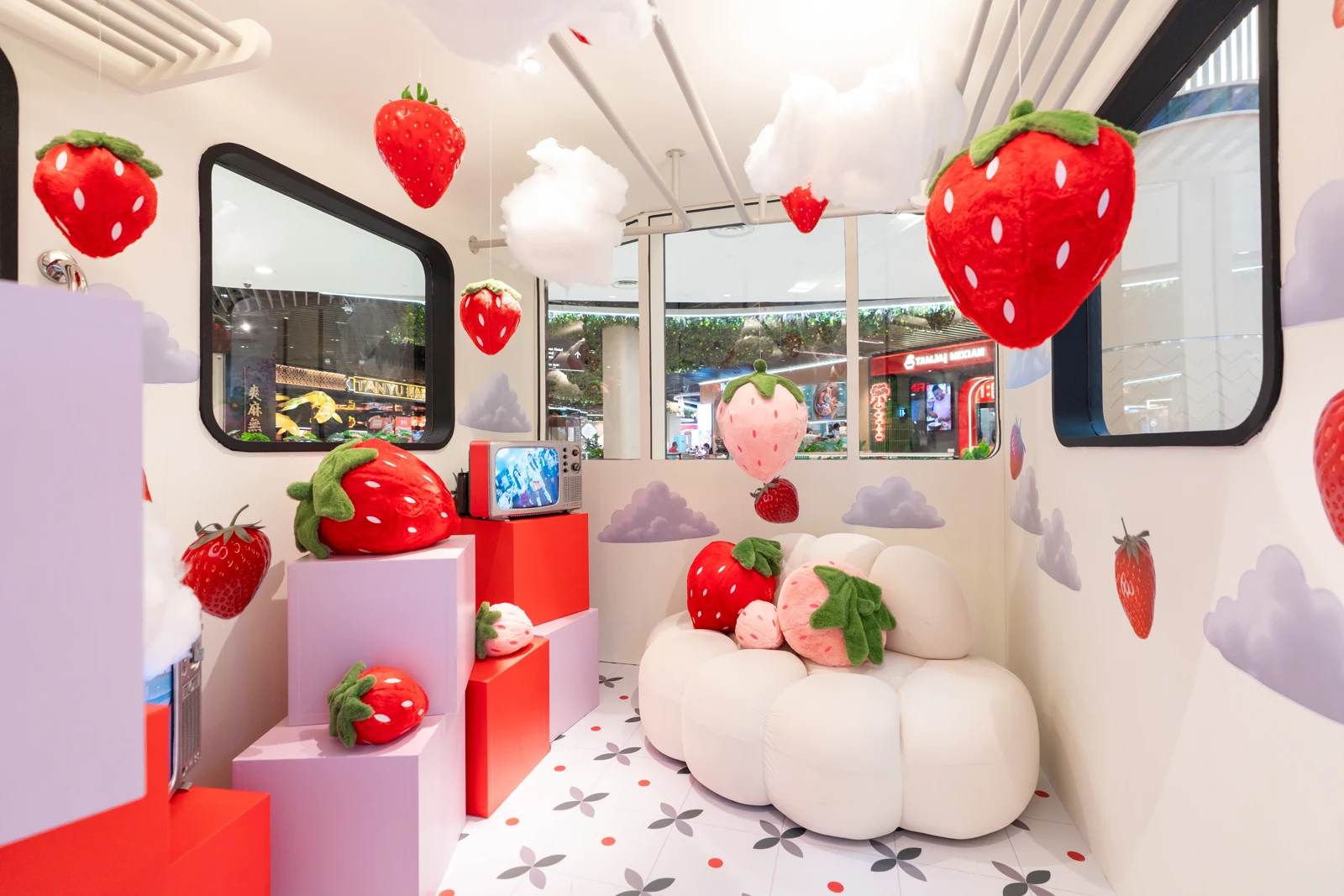
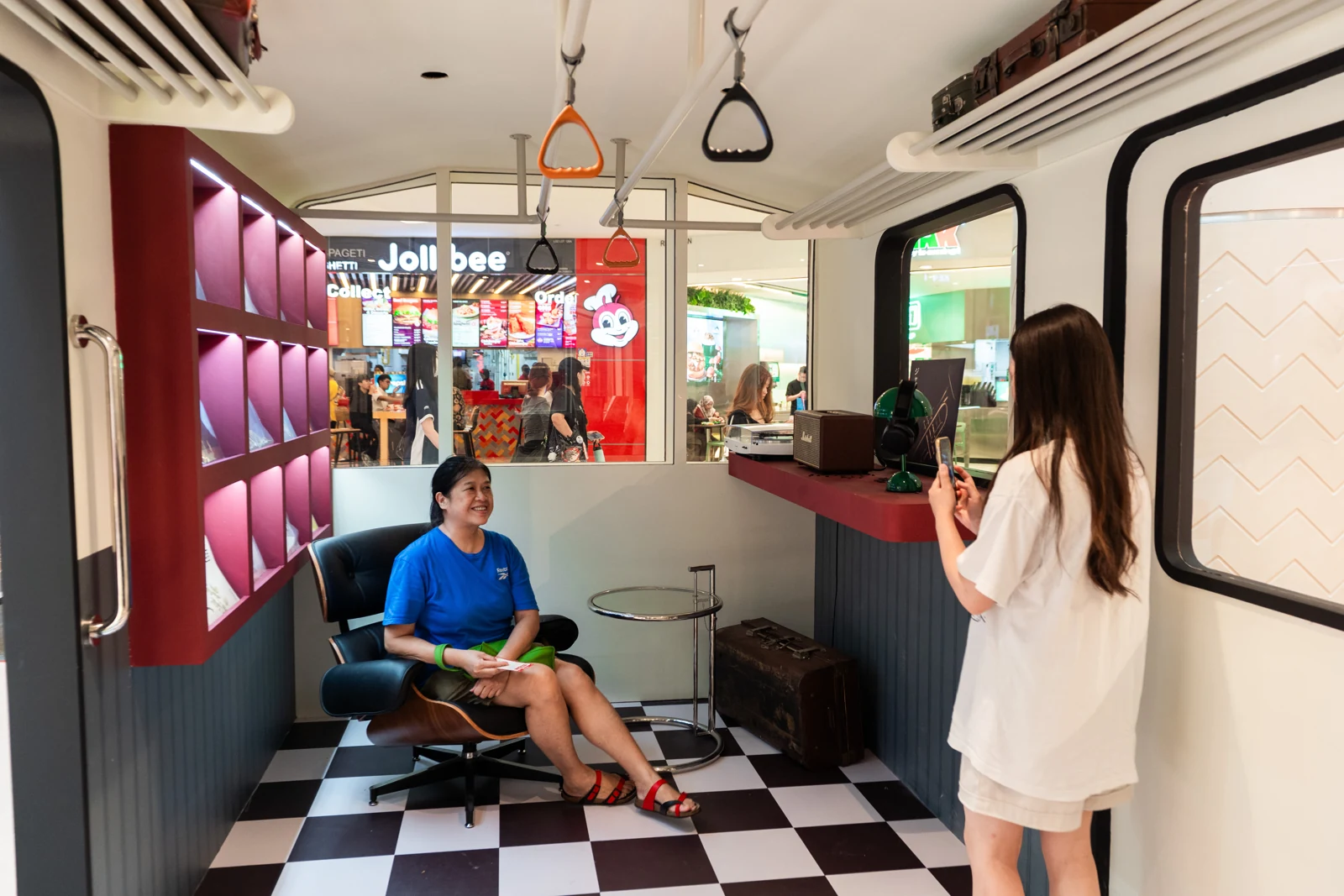
The train cabins gave POKKA’s flavours distinct personalities. Hanging strawberries, soft clouds and a rounded cloud sofa created a bright fruit-tea world. The coffee carriage paired upholstered seating and a checkerboard floor with café equipment, coffee beans and a collection of vinyl records.
The small interactions made those spaces worth exploring. Guests could see themselves on a retro television in the strawberry cabin, or settle into the coffee cabin’s café setting for a photograph. The sensory direction also included strawberry and coffee scents, extending the product idea beyond colour and scenery.
Outside the train, the red bridge, Japanese garden details, mirrored photo wall and restaurant frontage connected the activity areas. Station signs and a consistent Journey Card helped visitors find their next stop.
Inside the strawberry cabin
Become part of the picture.
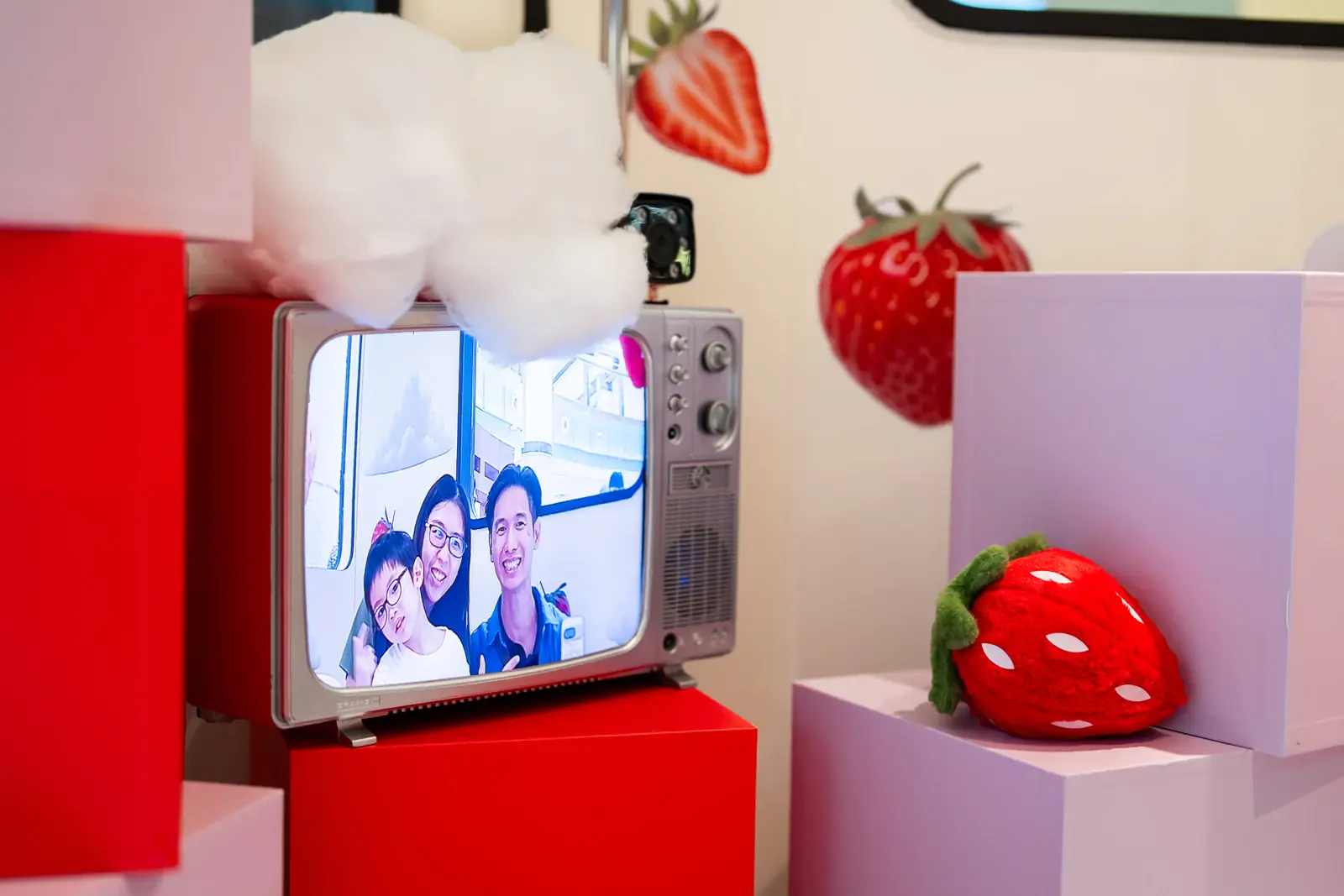
A small retro television sat among the clouds, strawberries and pastel display blocks. A camera above the set put guests on its screen, turning a familiar household object into a playful photo moment.
The television gave the cabin something to do as well as something to photograph. Visitors could pose together and see themselves framed inside the strawberry world, with the cloud sofa and oversized fruit carrying the same visual idea through the space.
Inside the coffee cabin
Give the coffee story a sensory setting.
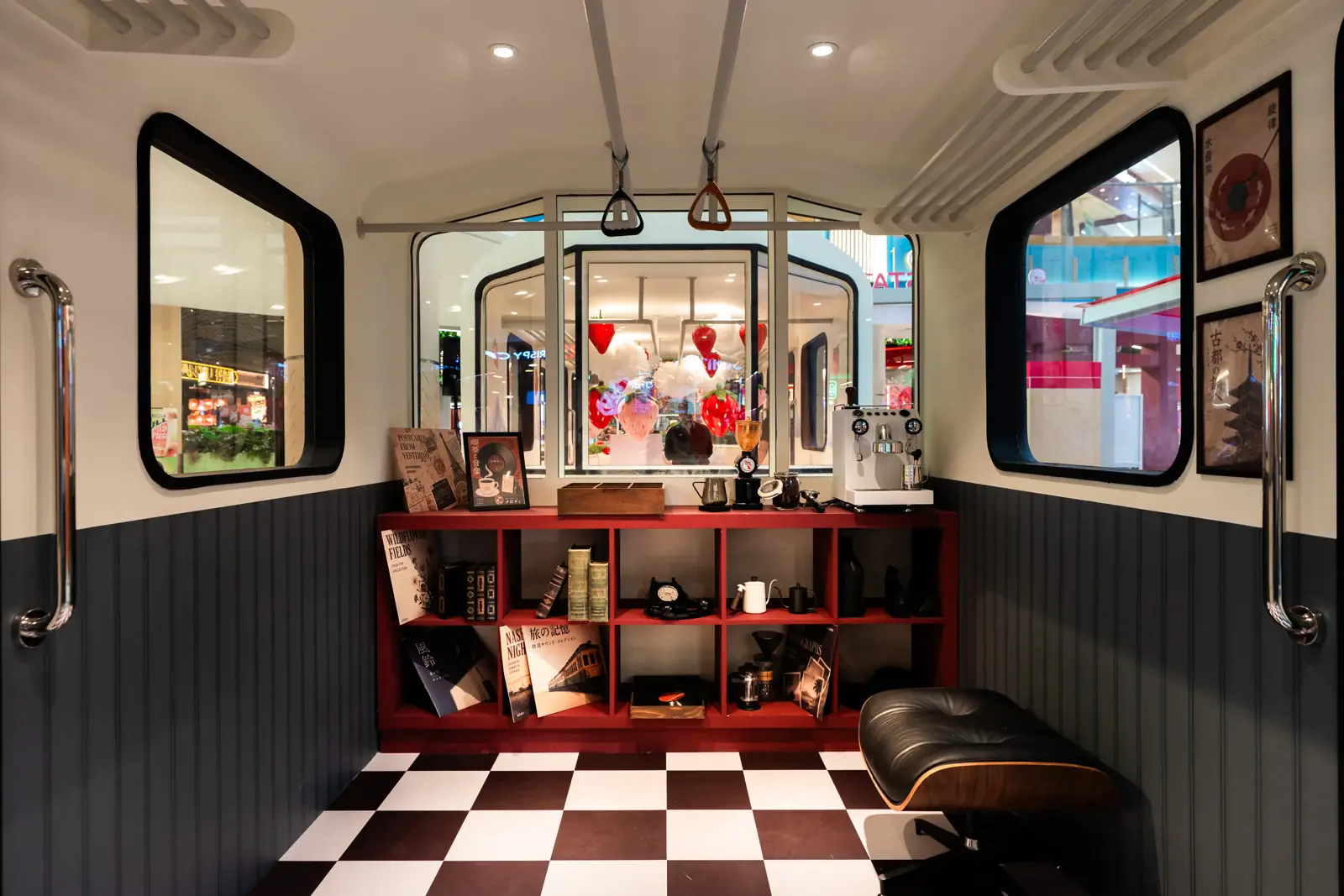
Coffee beans, a grinder and an espresso machine made the café reference tangible. They sat alongside cups, brewing accessories, books and records; upholstered seating and warm lighting invited guests to pause within the train.
The design also called for a coffee aroma in the cabin. Together, the ingredient, equipment, scent and styling connected this photo space to POKKA’s coffee range. Each detail helped carry the café mood into a temporary event installation.
03The games
Put the product into the play.
Three activities gave visitors different ways to engage with POKKA. The digital claw turned the giant television into an arcade moment. Spin the Bottle made the Oolong Tea pack the game piece. Giant Jenga put product messages onto the blocks guests handled, with an oversized picture die setting up each turn.
Game 01 / Custom digital claw experience
Grab Your Poka-Poka
Your phone controls the big-screen moment.
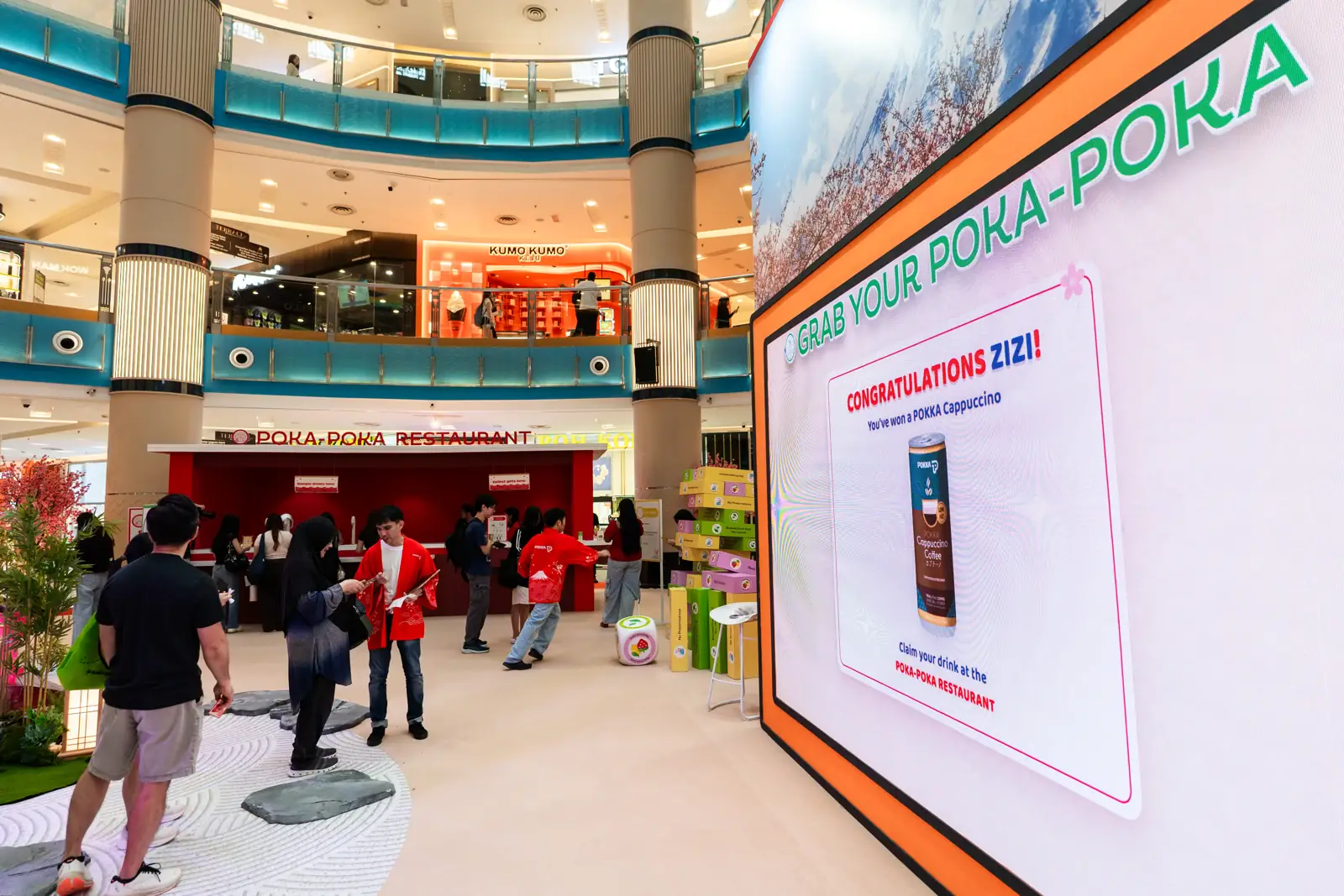
We developed the digital claw game around two connected screens: the guest’s phone for control and the giant retro television for the action. The station brief guided visitors to scan a QR code, connect to the game and steer the claw towards the POKKA capsules.
Baito’s build brought together the game, touch controls, branded capsule and product visuals, and the sequence from play to prize reveal. The client’s feedback shaped details such as capsule colours, campaign typography and how the winning product appeared.
The large display made an individual turn visible across the activity area. A successful grab led to a product reveal and an instruction to collect the prize at the POKA-POKA Restaurant, bringing the game back to the drinks.
- 1Scan to connect
- 2Steer the claw
- 3Make the grab
- 4See the result
Role in the conceptA familiar arcade action, made at the scale of the concourse and built around POKKA products.
Game 02 / Physical product-led game
Spin the Bottle
Make the bottle the thing people play with.
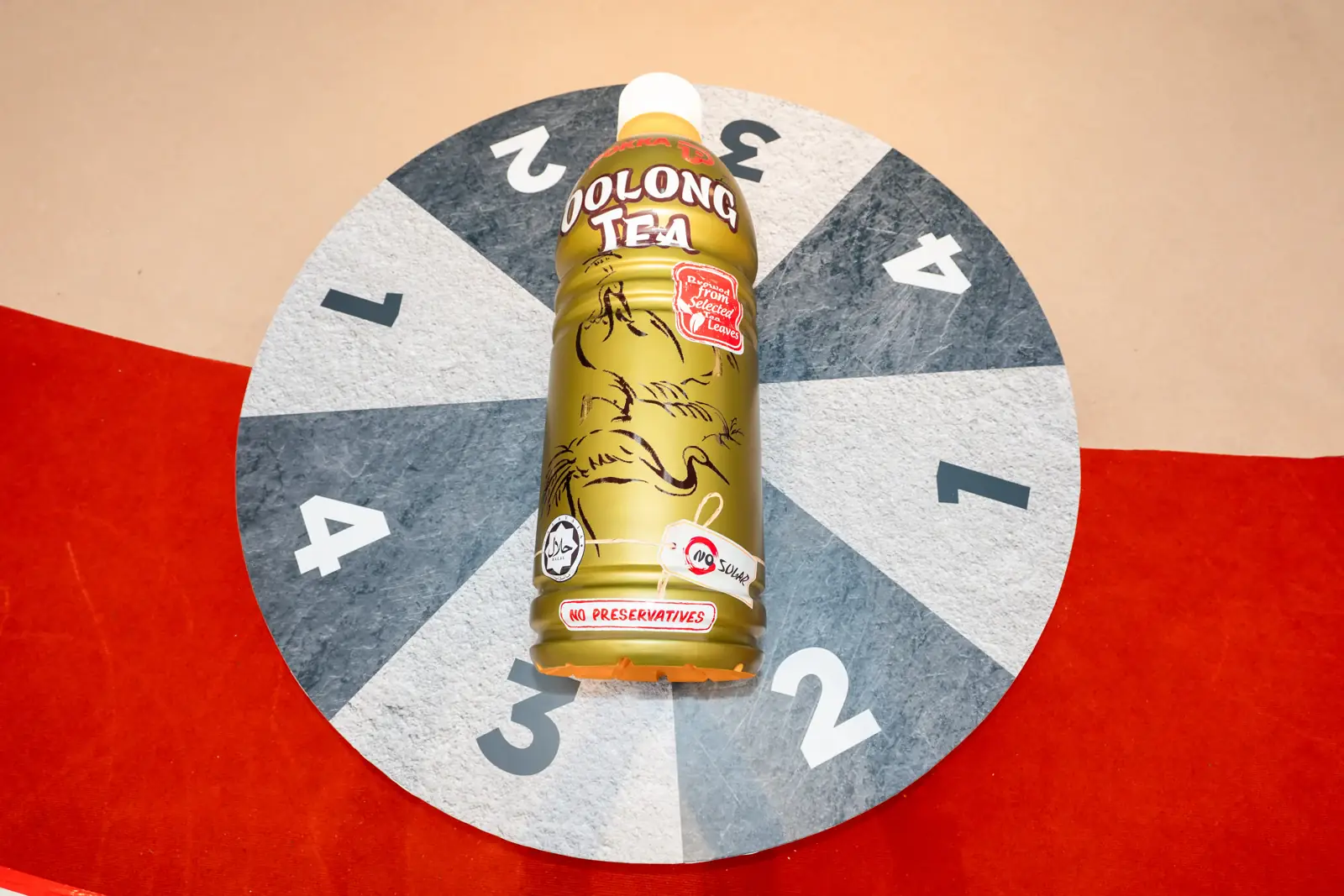
Spin the Bottle used an oversized Oolong Tea bottle as the game piece. Guests gave it a spin, and the number it landed on determined the prize. The product shape became the interaction, keeping POKKA visible throughout the action.
The development work covered the bottle form, the numbered outcomes and the promoter-led explanation. The promoter brief specified one spin per guest, with the result announced and recorded before the winner collected their prize at the restaurant.
Alongside the digital claw, this gave the event a physical way to participate. The mechanics were easy to explain, and the tasting and redemption counter gave both prize games a shared destination.
- 1Spin the bottle
- 2Read the number
- 3Confirm the prize
- 4Collect at the restaurant
Role in the conceptAn everyday product silhouette turned into an oversized, hands-on brand interaction.
Game 03 / Oversized product-message game
Giant Jenga
Roll the die. Find the symbol. Keep the tower standing.
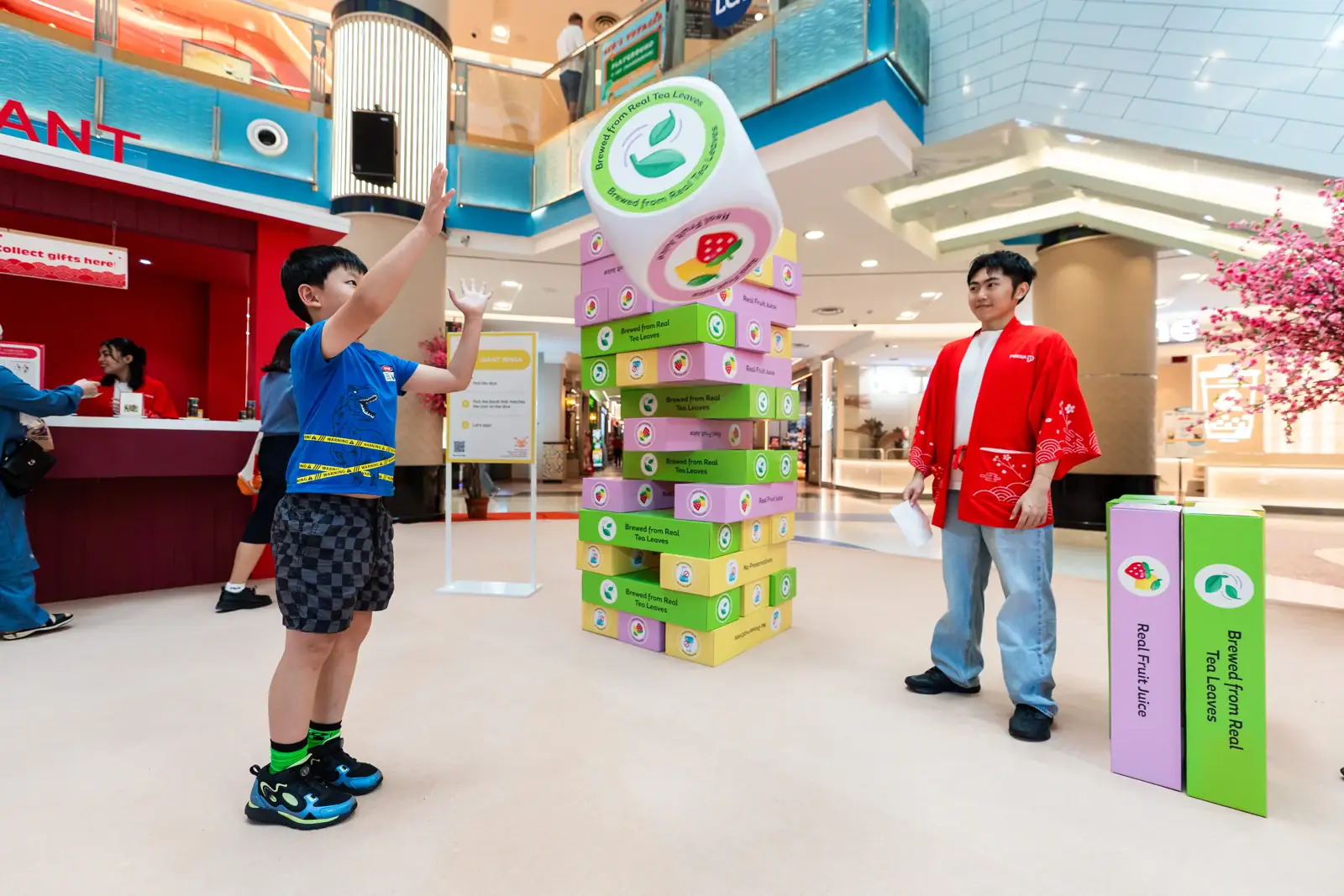
We brought a familiar tabletop game into the concourse with an oversized tower and a giant picture die. Guests rolled the die, matched its symbol to a block and chose their next move while the team guided play.
The finished blocks used green, pink and yellow faces with product icons and messages: “Brewed from Real Tea Leaves”, “Real Fruit Juice” and “No Preservatives”. Those same visual cues appeared on the die, making the product story part of the rules and the objects guests touched.
Promoters explained the messages, helped guests take their turn and rebuilt the tower between groups. The result was a shared activity with a clear role in the campaign: giving people time with POKKA’s product claims through play.
- 1Roll the picture die
- 2Match the symbol
- 3Choose the block
- 4Keep the tower standing
Role in the conceptProduct messages built into the game pieces, with a social challenge that guests could play together.
04The tasting
The sushi bar, reimagined for POKKA.
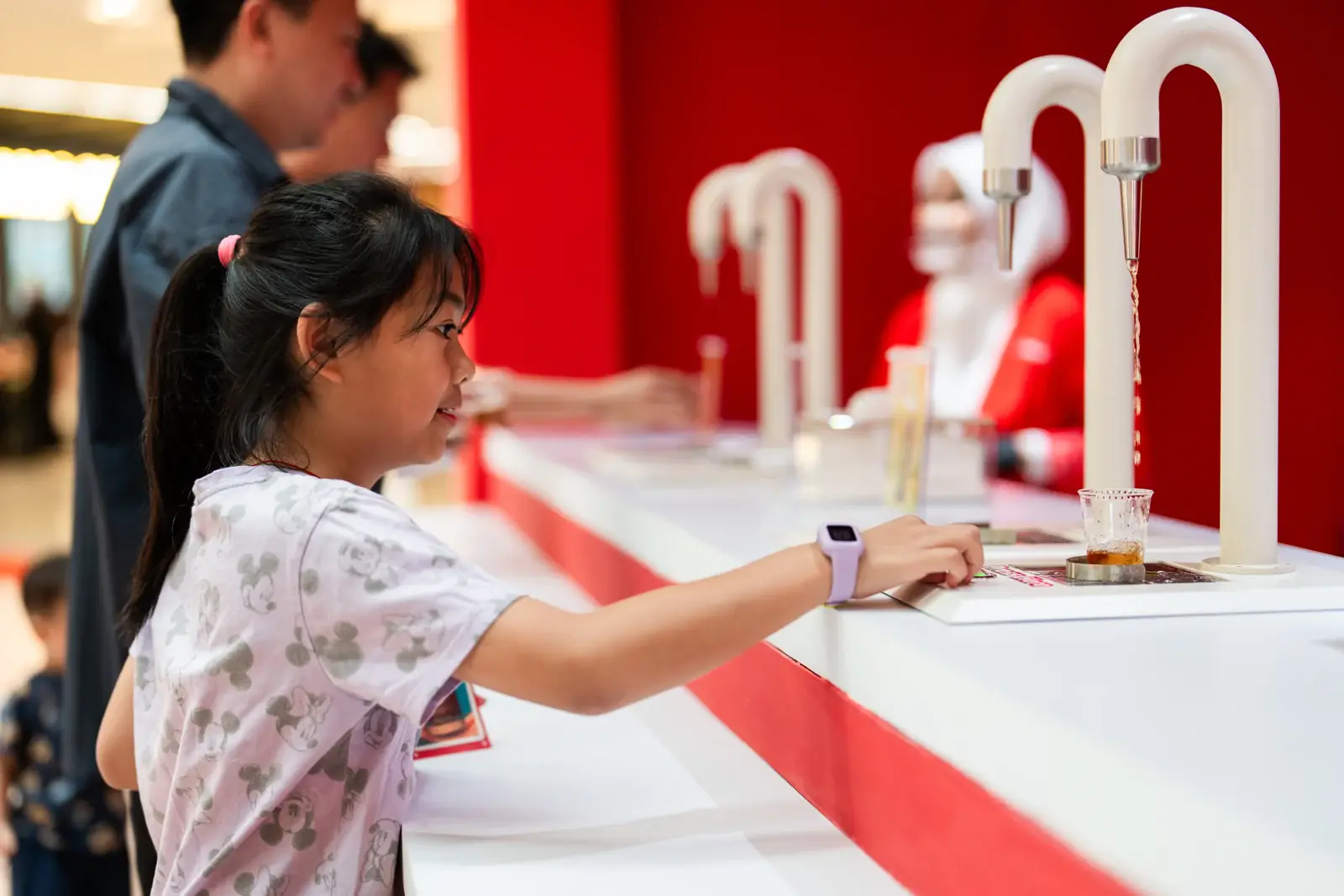
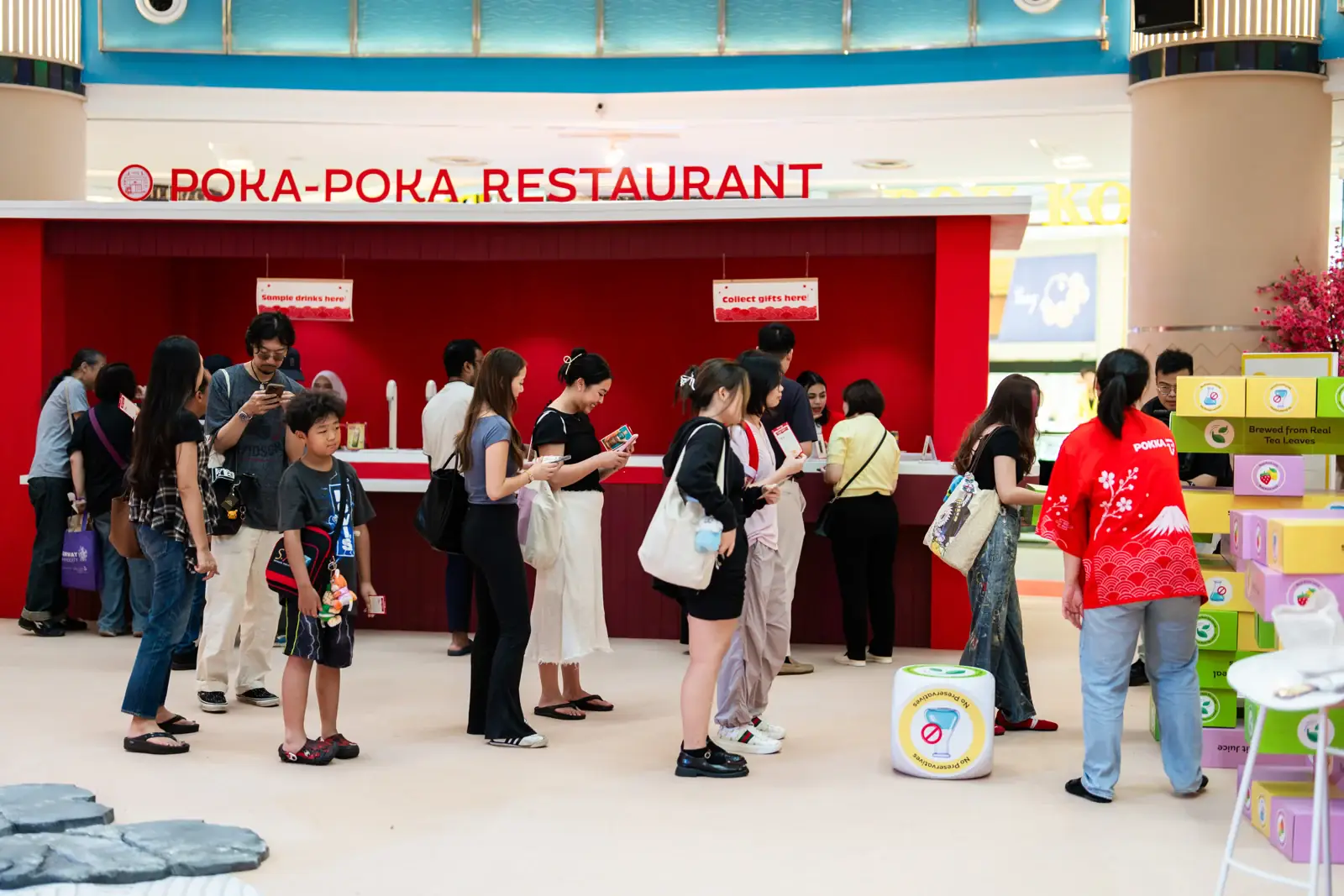
The POKA-POKA Restaurant carried the Japanese setting into the tasting experience. Its red shopfront opened onto a sushi-style counter: POKKA drinks travelled along a moving conveyor, alongside a row of curved press-to-pour taps, giving visitors a recognisable place to stop and try the drinks.
Guests took a POKKA sampling cup, placed it beneath a tap and pressed to pour. That simple action made tasting something they could take part in themselves, with the team nearby to introduce flavours and help them choose.
The counter’s design joined the product and the setting: drinks flowed into branded cups within the same restaurant world that visitors had seen from the concourse. The familiar act of serving a drink became another small interaction within the larger event.
Baito’s operating plan supported that interaction with counter cleaning, flavour presentation, replenishment and sample counts. The restaurant also handled Journey Card gifts and game prizes, connecting the end of each activity back to a place where guests could taste POKKA.
05The keepsake
Let guests take a piece of the day home.
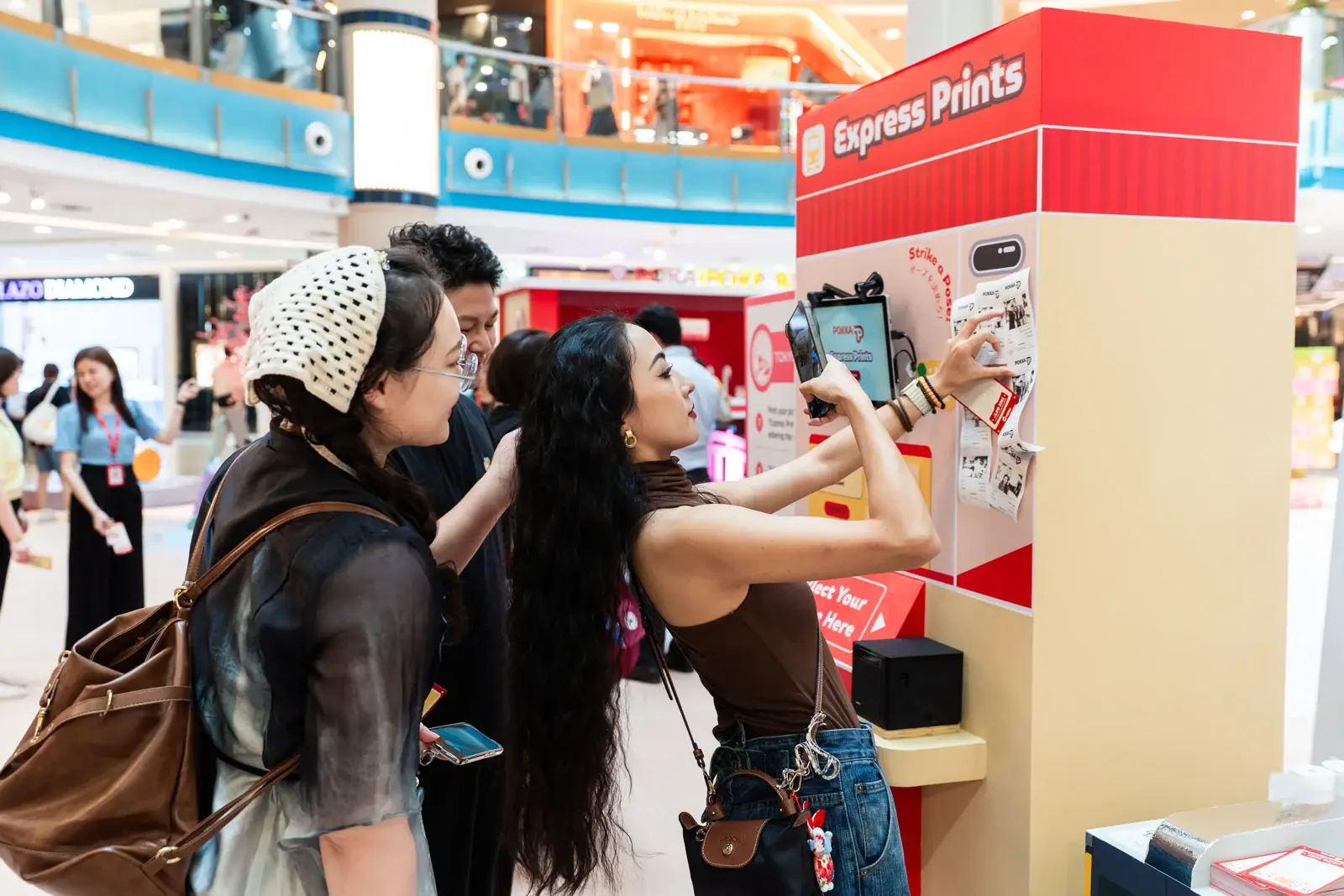
Express Prints added a personal memory to the larger event. Visitors posed at the branded booth and received a black-and-white photograph in a receipt format.
The print connected naturally with the train setting: a small paper keepsake from their time at the station. The booth’s branding and the physical print carried the campaign into something guests could hold and keep.
Baito’s experience design covered the steps around the photograph, including capture, review and collection. The event report recorded 5,412 photo receipts printed across the four days.
Within the wider activation, the booth had a distinct role. The cabins gave guests a place to make their own photographs; Express Prints gave them a tangible souvenir.
06The delivery
Support the journey at every station.
A connected event needs a team that understands the whole experience. Baito’s station-by-station briefing covered how to welcome guests, explain the Journey Card, guide activities and direct winners towards redemption.
The preparation also addressed the small tasks that matter during a busy event: resetting games, keeping photo areas ready for the next group, replenishing print supplies, clearing sampling counters and communicating technical issues.
Measurement was built into the operating plan. Entry counts, completed Journey Cards, activity participation and sampling records were tracked separately. This made it possible to report what people actually did across the event.
The same attention ran through the planning work, from matching station names across signs and cards to making the wording easier to read. Those decisions gave the team a clearer experience to deliver and guests a clearer journey to follow.
07The results
Four days.
Thousands of completed experiences.
Journey completion
4,848 completed / 7,288 cards issued
Baito’s event report recorded 8,030 engagements and 4,848 completed journeys. Alongside the 5,412 photo receipts printed, it logged 5,123 participations in Grab Your Poka-Poka, 5,330 in Spin the Bottle and 5,376 in Giant Jenga.
Of 7,288 Journey Cards issued, 4,848 were recorded as completed: a 66.5% completion rate against cards issued.
These results show the breadth of participation across the event. People engaged with multiple parts of the experience, from play and photography to tasting and redemption. The completed Journey Cards give the story a useful measure of how many journeys reached the final checkpoint.
For brands planning a similar activation, the value of this approach is the connection between the parts. The setting creates curiosity. The activities give people something to do. The team helps them take part. The product and keepsake give that time a clear connection to the brand.
Your next activation
Let’s make
your brand an experience.
Baito brings together event planning, themed environments, interactive experiences and on-site teams. Tell us your brand, audience, venue and campaign objective, and we can help shape a journey with a clear role for every activity.
Plan a brand activation with BaitoPhotography: Patrick Chu · Passion Works Production / Passion Works Moments.